GIANT CUTTLEFISH POPULATION COLLAPSE AT WHYALLA 2026: WHAT THE DATA SHOWS.
July 2026
Back in July, I posted about diving at Whyalla during what should have been the peak of the Giant Australian Cuttlefish aggregation, only to find almost nothing there. I said at the time I'd update once SARDI released their numbers. They have now, and it's worse than I expected.
THE NUMBERS
SARDI's standard survey, run every year since 1998 using the same method, recorded zero cuttlefish across their June and July 2026 dives at Point Lowly. Not a low count. Zero. That's down from 63,734 in 2025, which was already the fifth-lowest count on record. Before that, the population had spent most of the last decade sitting above 100,000, and hit a high of nearly 250,000 in 2020.
A parallel survey by the Department for Environment and Water, using similar methodology across the same sites, found a few more animals scattered through the season, enough to produce a population estimate of 113. When DEW modified their count to search under rocks with torches for cuttlefish hiding out of sight, that estimate rose to 1,811. Even taking the most generous of those figures, it's still a population that's crashed by well over 95% in a single year, and the standard, directly comparable survey method says it's effectively gone.
SARDI's report ruled out water temperature as the cause. Temperatures at Point Lowly in 2025 and 2026 were within the normal historic range. What they point to instead is the harmful algal bloom that first appeared off the Fleurieu Peninsula in March 2025 and spread through Gulf St Vincent into the Spencer Gulf. That bloom has already been linked to mass mortality in Calamari, Abalone, Pipi, Leafy Seadragons and a long list of other species. Cuttlefish now look to be on that list too.
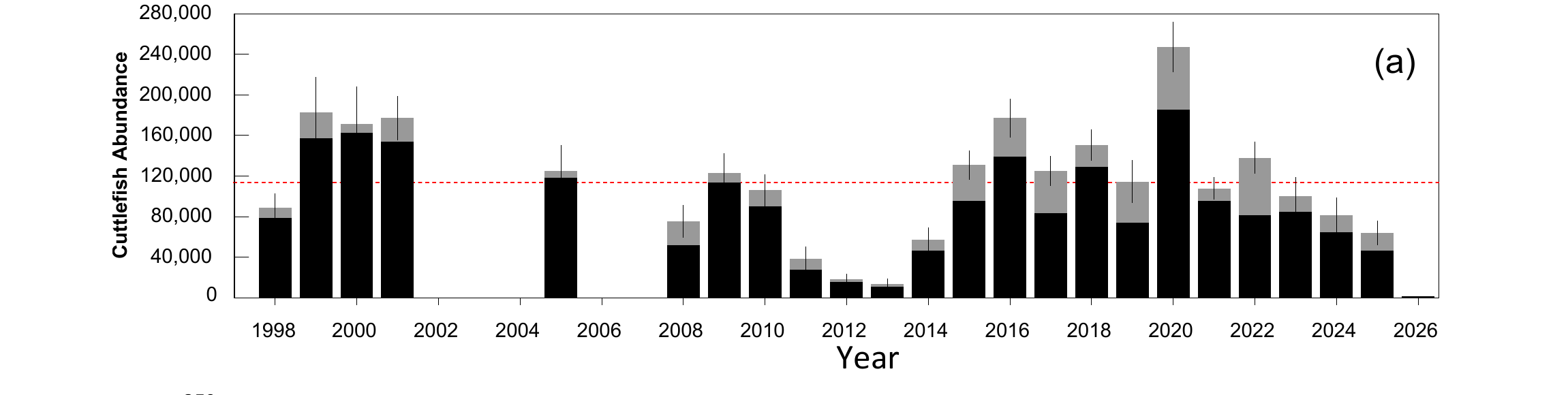
Figure: SARDI 2026 Giant Australian Cuttlefish Population Estimate, PIRSA Fisheries and Aquaculture, August 2026
WHAT I SAW IN THE WATER
I spent two weeks in June at Whyalla filming this season, including 15 hours across the first week alone searching every crack and crevice on reefs I've dived many times before. In that time I saw three cuttlefish. Three. On a good year you'd see that many in the time it takes to clear your mask. I was quoted in a media release by the Australian Marine Conservation Society when SARDI released its numbers. I said it was one thing to see the reefs empty myself, and another thing entirely to have that backed up by hard data. Diving it, you tell yourself maybe you're just in the wrong spot, wrong tide, wrong day. Seeing the SARDI numbers confirms it wasn't that. It's genuinely not there this year. I've filmed this aggregation before in good years, you can see that footage in Love and Light. The contrast between that and what I found in June is hard to put into words. Empty reef doesn't look dramatic on camera. It just looks like nothing happened. That's almost harder to sit with than filming something visibly damaged.
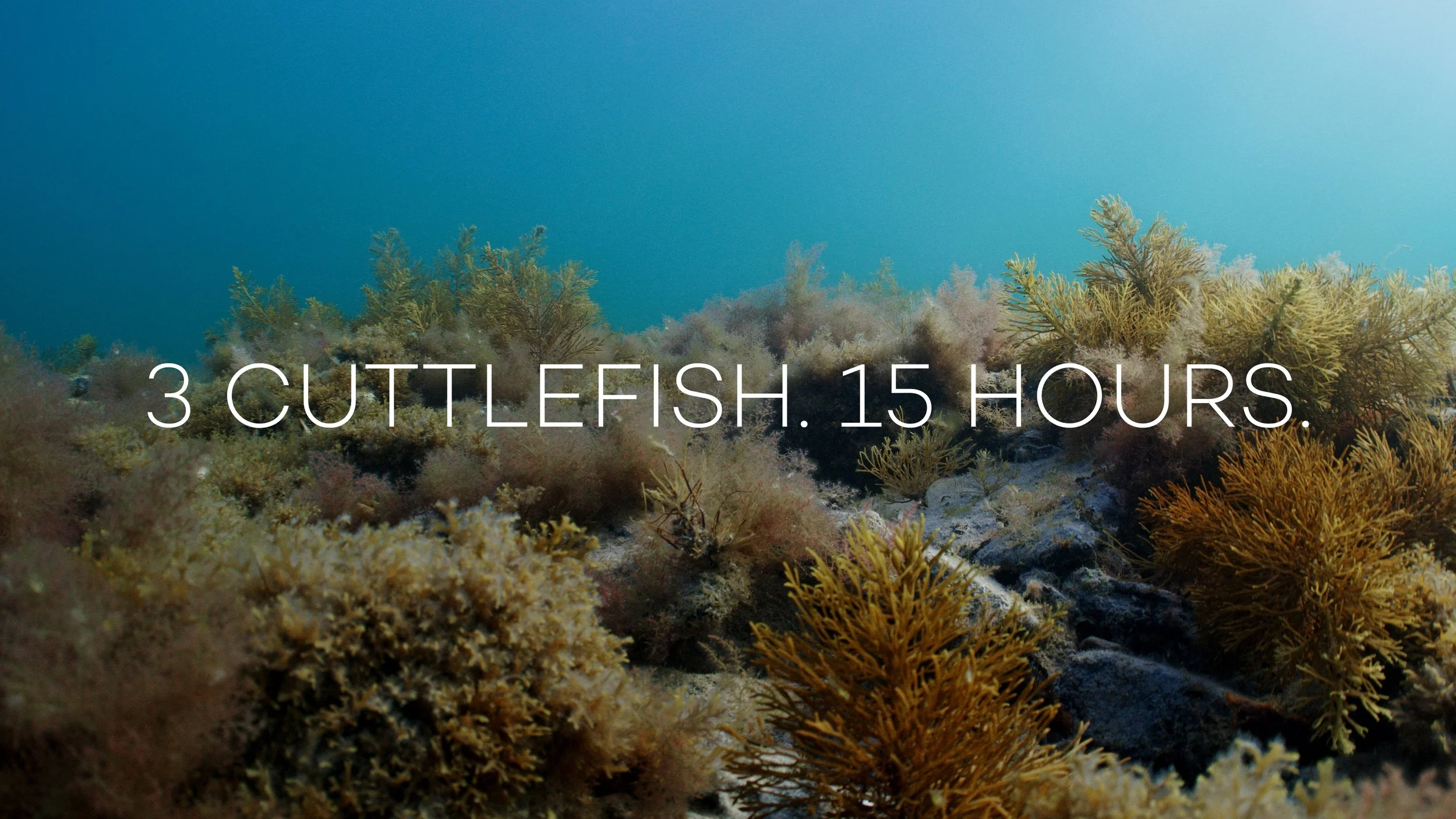
Watch footage from several dives at Whyalla, filmed during July 2026.
It's easy to miss what's not there. Sitting side by side, this footage says more about the scale of that absence than the numbers alone can. As the Australian Marine Conservation Society reports, this kind of absence is a powerful reminder of how much remains unknown about the pressures facing our oceans.
WHAT HAPPENS NOW
Nobody currently knows whether this is a one-year event the population can bounce back from or something longer-term. Cuttlefish are short-lived animals; most breed only once, so a single bad breeding season can ripple through population numbers for years. The Australian Marine Conservation Society has called on state and federal governments to disclose funding for long-term marine monitoring and to act on reducing the pressures on this stretch of coastline.
