How Do I Become an Underwater Cinematographer?
How Do I Become an Underwater Cinematographer?
It's a question I get asked a lot, usually after a screening or from someone who's just tried scuba diving for the first time and can't stop thinking about it. There's no single pathway into underwater cinematography, but there is a pattern, and it's the one I followed myself. Dive first, film second, and let the storytelling come from years of just being in the water.
I grew up landlocked, a long way from the ocean, and didn't dive until I was 16. I didn't set out to become a cinematographer. I became a dive instructor on the Great Barrier Reef, and part of the job was taking photos of guests. That's genuinely where it started. As GoPros and social media took off, photography turned into video almost by accident, and from there it became about learning how animals and light behave, one dive at a time.
If you're wondering how to break into this industry, here's what actually got me here.
My Path Into Underwater Cinematography
The shift from stills to video happened gradually, fuelled by working around conservation projects on the reef. We'd film restoration efforts ourselves, cut and edit them, and that's when it stopped being about a pretty image and became a story people could actually connect to. That was the turning point for me. Once storytelling became the goal rather than the shot, I knew this was what I wanted to do professionally.
Certifications and Training You'll Need
Here's something that surprises people: I've never been to film school. Everything I know, I learned on the job, underwater, through hours of trial and error. Shooting macro, shooting wide angle, working out where the light falls best, when to backlight a subject and when not to. I've been lucky to work alongside some brilliant people over the years who taught me a lot about lighting and storytelling, but the certification that matters most isn't a filmmaking one.
It's diving.
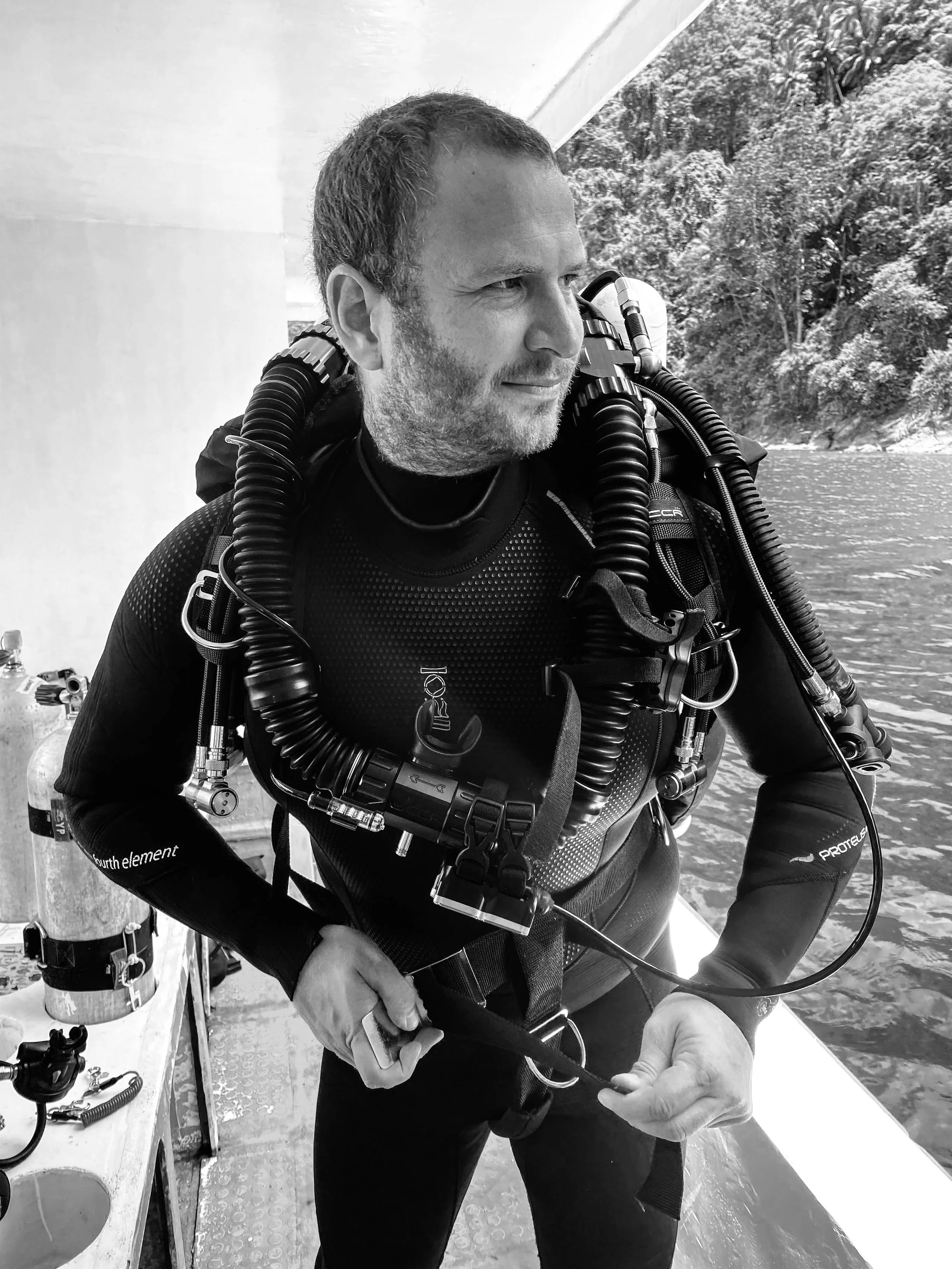
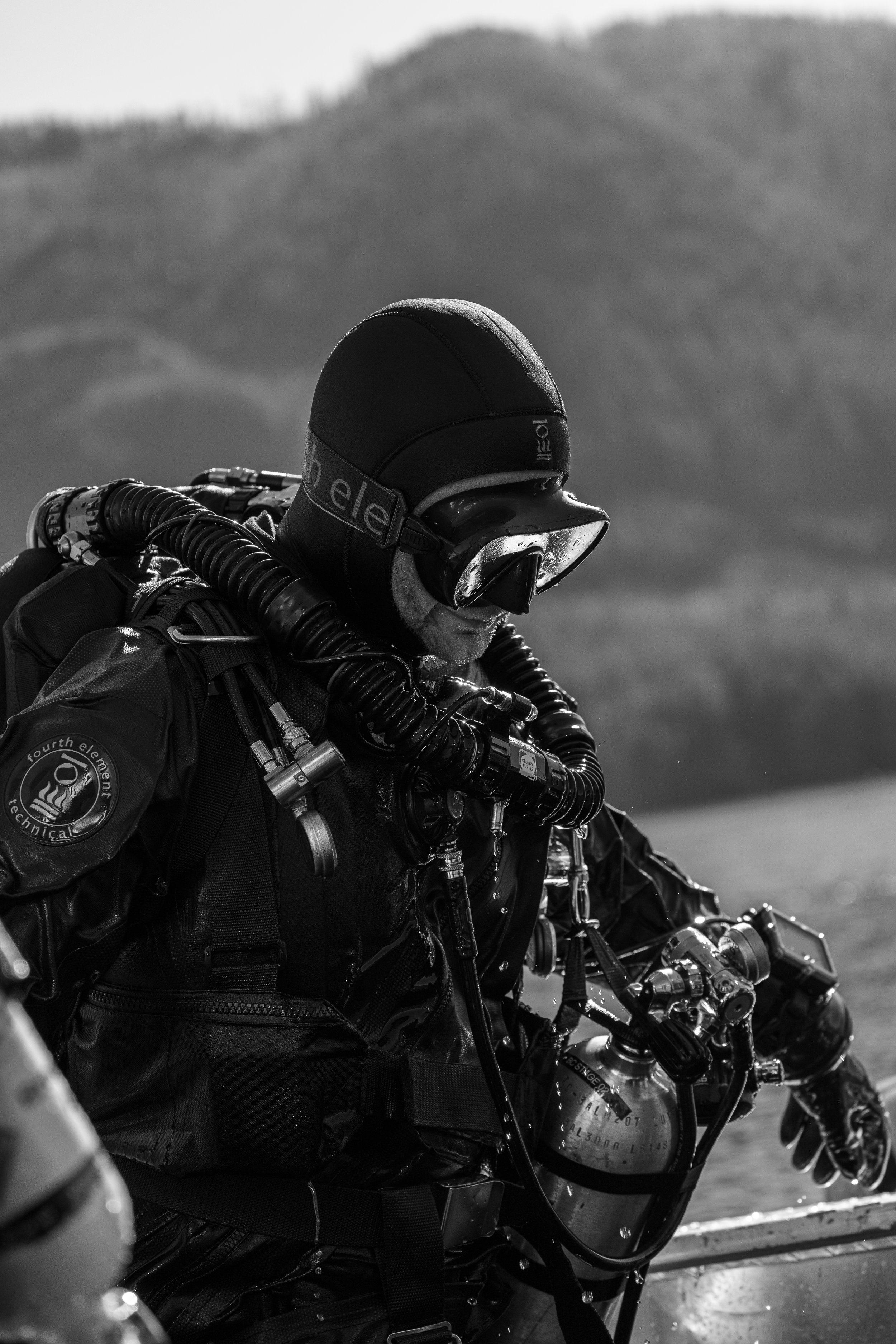
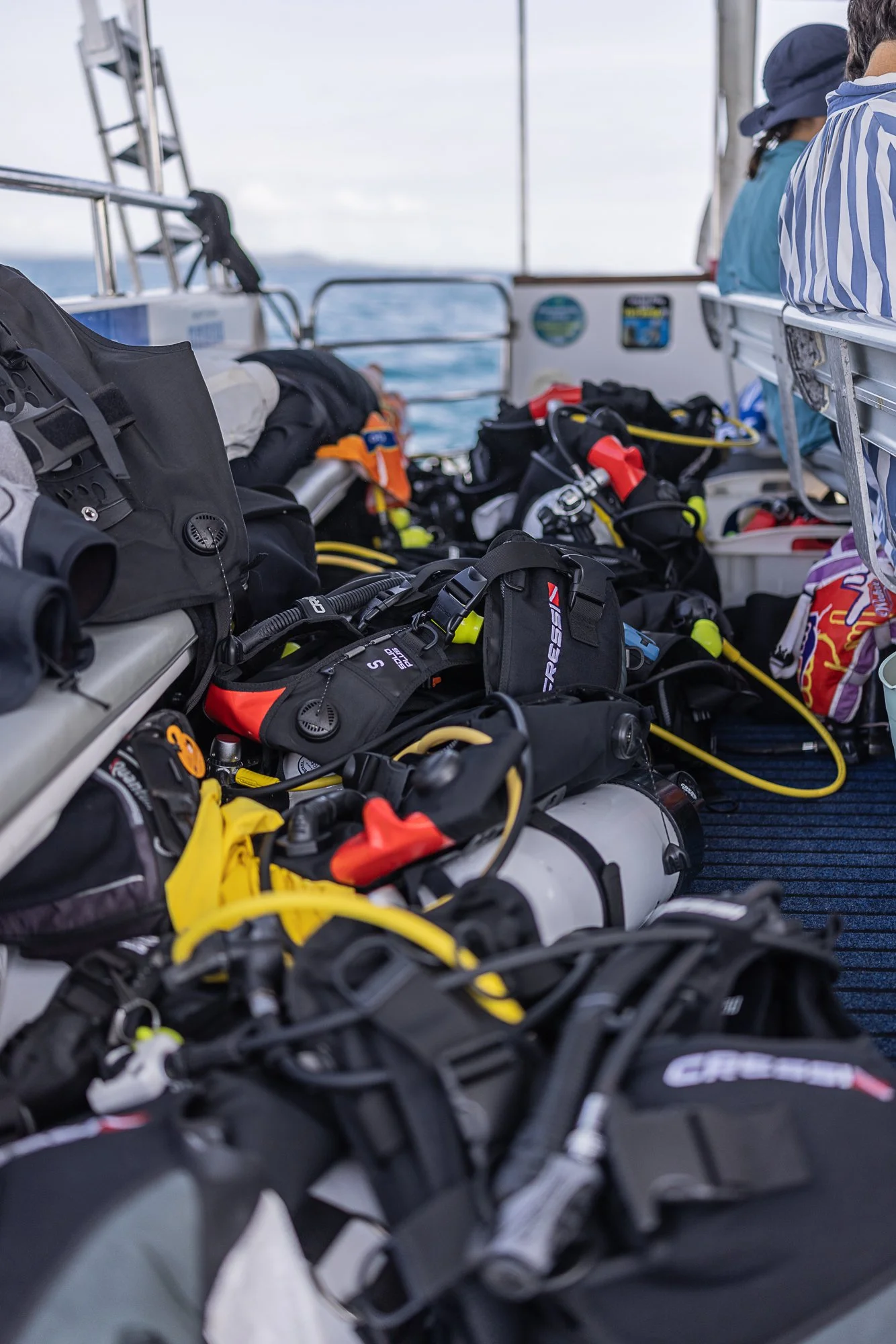
Before you even think about picking up a camera, your competency and confidence in the water need to be unquestionable. Neutral buoyancy has to become second nature, something you're not consciously thinking about, because the moment you're managing your body position and worrying about a shot at the same time, you're behind. I always tell people diving comes first. Build that foundation properly, then layer the camera skills on top.
Essential Underwater Filming Equipment
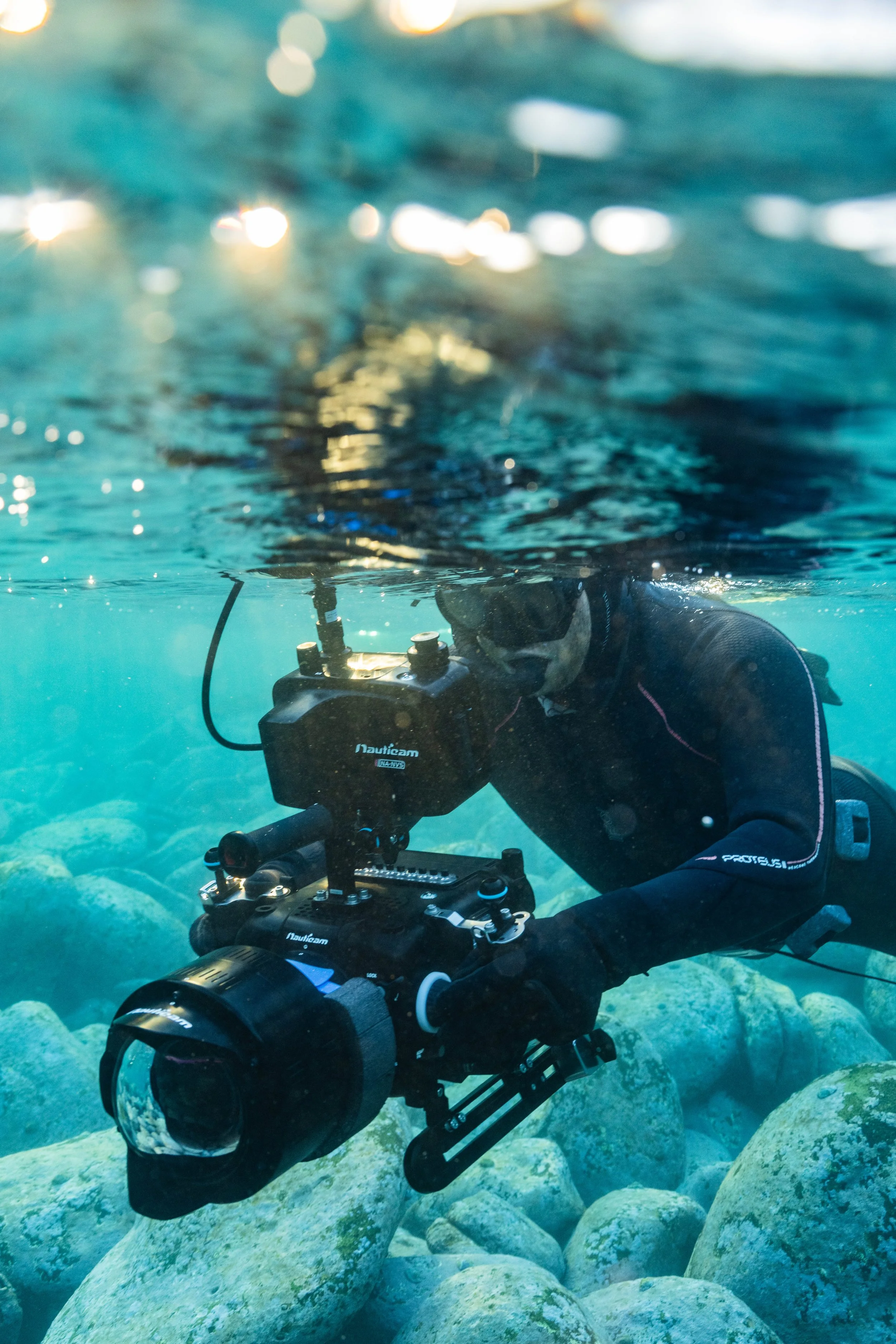
I'm a firm believer that the best camera is the one in your hand. Whether it's a GoPro, a TG7, a Sony, or a full cinema housing, every camera on the market today is capable. It's not the tool, it's how you use it.
Don't let gear become a barrier to starting. Learn lighting, learn wide-angle composition, and above all, learn storytelling. Who's the character, what problem are they facing, how do they get out of it, and how do you want the viewer to feel by the end? That's the craft. Improvement comes from picking a subject, going out, making mistakes, and reviewing your own footage honestly. I still do this. I'll look back at a card and think, "I could have done that better, here's what I'll change next time." That cycle never really stops, no matter how experienced you get.
Landing Your First Underwater Filming Job
My first paid job was with Operation Posidonia, a University of New South Wales seagrass restoration project, filming environmentally friendly moorings in Port Stephens designed to protect the seagrass beds.
From there, a move to Townsville during COVID put me on the Great Barrier Reef and in constant contact with scientists, and that's where I'd point most people starting out. Science communication is one of the best pathways into underwater filmmaking. There's no shortage of research projects that need their work communicated visually, and that's a genuine, ongoing need for a cinematographer who can turn data into a story.
My first blue chip production was Secrets of the Octopus for National Geographic. I relocated within five days of the job interview and spent close to two years travelling to film octopuses around the world. I came in as assistant camera, formatting cards, cleaning lenses and sensors, keeping the whole operation running, and due to scheduling and circumstances, ended up shooting a significant amount of footage too. I think of that period like being a substitute on a sports team. You had to know the game plan, know what shots were missing, and be ready to get in the water and deliver the moment you were needed.
Diving Skills vs. Cinematography Skills
People often ask which is harder to master, diving or filming. Here's the honest answer: you cannot be a good underwater cinematographer without first being an excellent, unthinking diver.
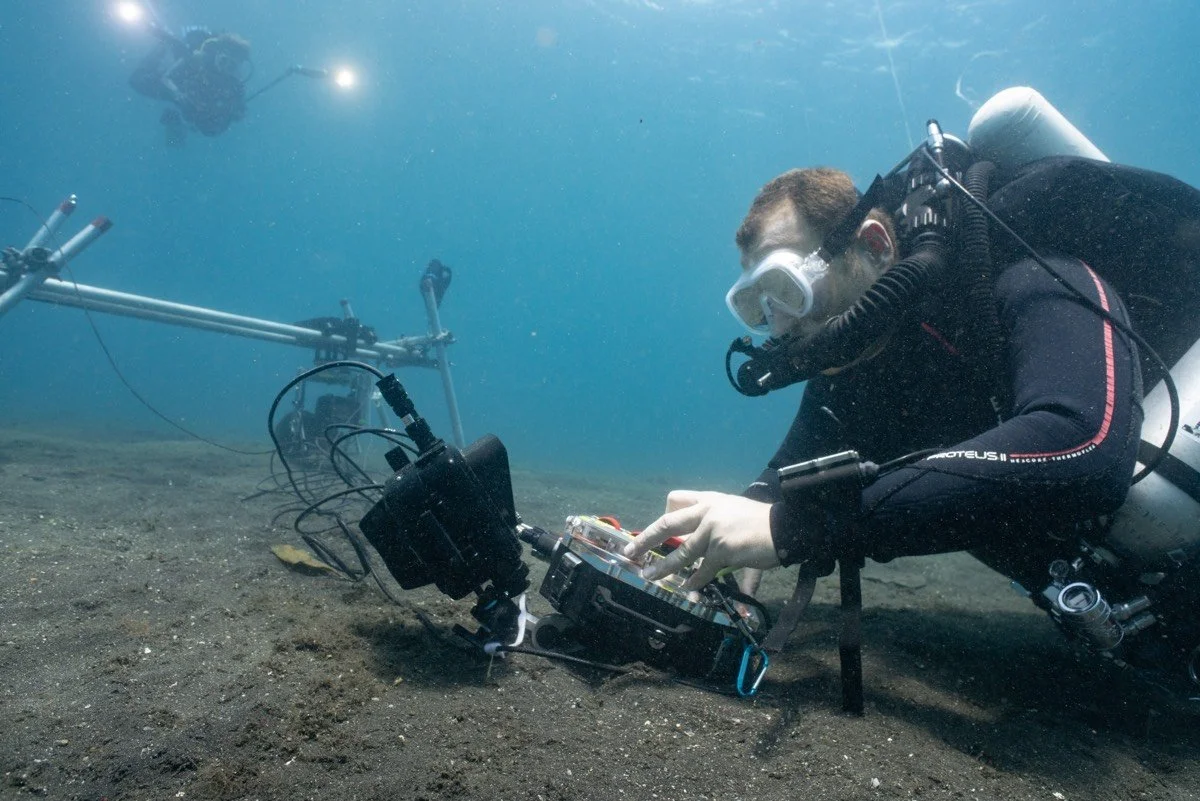
There's a huge amount of trust placed in you once you're underwater with a production depending on your footage. Monitoring live on a reef, in current, tethered by a cable, is genuinely difficult, so your buoyancy, your gear, your comfort in the water all need to be at a level you don't have to think about.
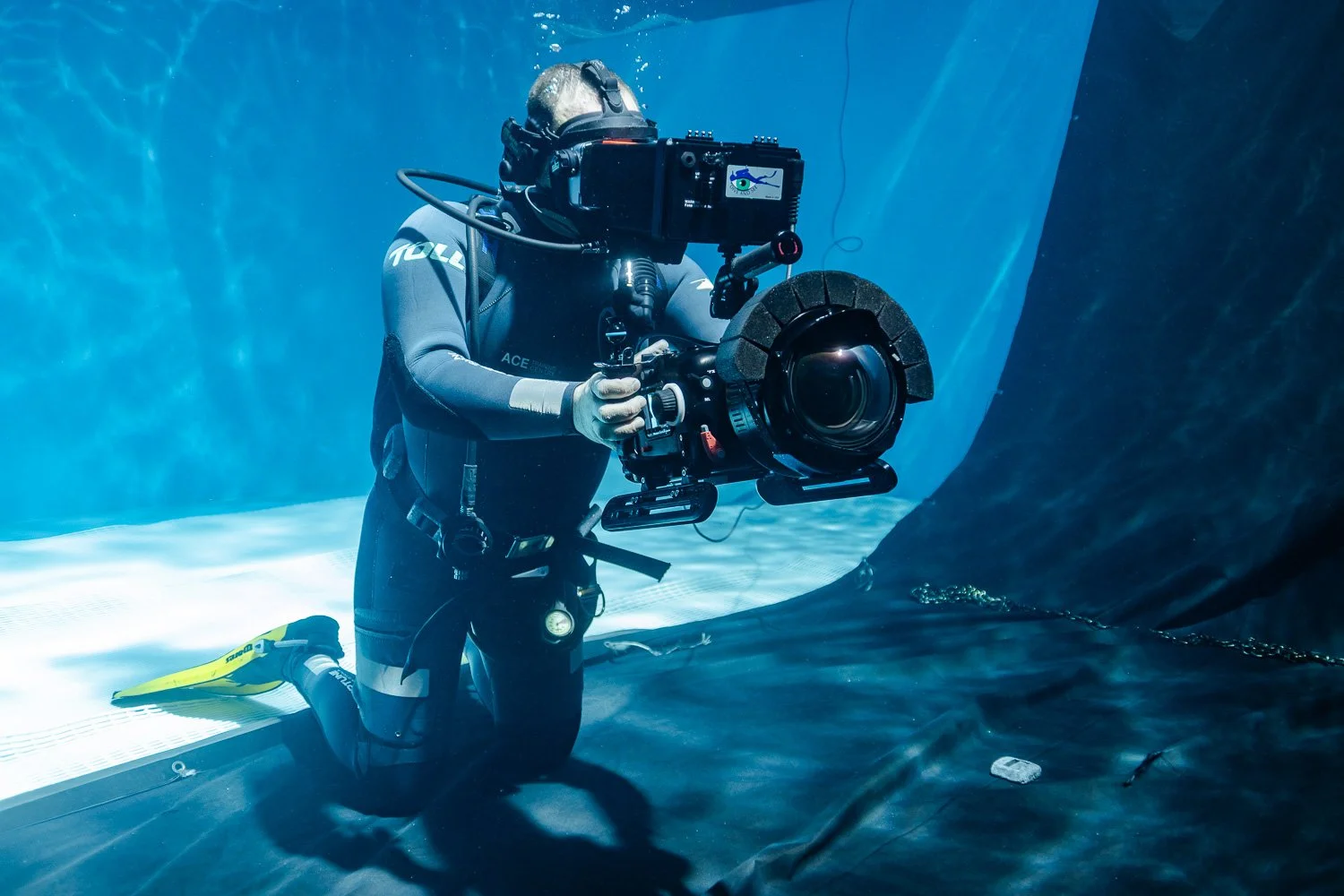
Then you add a camera, and the whole equation changes again. The camera itself needs to be neutrally buoyant. Not sinking, not floating, not pulling to one side. If you're fighting a heavy or unbalanced rig, it shows in the footage. What we're ultimately doing is taking an audience somewhere magical. You don't want a struggle to be part of that.
Common Challenges in Underwater Cinematography
The biggest challenge isn't technical, it's the weather, and everything it takes away from you. Everyone wants flat, sunny, twenty-metre visibility conditions, but you'll get booked for jobs with poor visibility, bad wind, animals that don't show up. The mental discipline is in staying ready regardless, because your window of opportunity might be seconds long. I've watched an animal for four hours waiting for one piece of behaviour, and when it happens, you need it in frame, in focus, and usable. There's no second take.
How to Build an Underwater Filming Portfolio
Building a reel when you're starting out is genuinely hard. You don't have the experience or the credibility yet, and that's fine. It doesn't have to stop you.
My honest advice: find something local. Pick an animal, a behaviour, or a location, and keep going back to it. Keep practising, keep improving, and you'll build a sequence that actually demonstrates you can shoot and tell a story, not just capture a pretty single shot. Once you've got that, move on and build another one.
Reach out to cinematographers and people already working in the industry for feedback. Don't take it personally if people are slow to respond; everyone's busy, often overseas, mid-project. And don't wait for permission. Self-fund a trip if you have to, ask a local team if you can tag along and shoot for your own portfolio, or simply recognise when conditions around you are good and make the effort to get in the water.
Above all, tell a story. Don't just collect pretty shots at sunrise and sunset. Show that you can build a sequence with a beginning, a problem, and a resolution. We're always thinking about how we want the audience to feel.
Who Hires Underwater Cinematographers?
The work comes from a real mix of places, and it shifts over time. Right now broadcast is a little quiet for me, so I'm doing project work for local marine science organisations while producing my first feature documentary, Seahorse School. That's fairly typical of how this career works. It's rarely one steady stream, it's several, and which one is busiest changes.
Word of mouth is everything in this industry. People need to trust that you'll give a project everything you've got and help them achieve the best possible outcome. That reputation is what actually gets you hired, far more than a cold pitch ever will.
Relationships are the engine behind that. A scientist you've worked with can recommend you to a producer, and once that producer trusts you, you become their go to for the next project, and the one after that. It's also worth remembering that it takes a whole team to get a shot, so networking isn't just about the person who might hire you directly for camera. Sometimes the role that gets you into a production isn't behind the camera at all. It's still an important cog in the machine, and it still builds the relationships that lead to the next job.
Honestly, it hasn't changed much for me even after a credit like Secrets of the Octopus. It's still a tough, competitive industry, and you have to keep putting yourself out there, keep making contacts, and keep doing good work. That never stops being the job.
Can You Make a Living as an Underwater Cinematographer?
Social media creates a misconception here. It can look like people online do this full-time, exclusively, but that's rarely the full picture. It's a genuinely tough, competitive industry, and income isn't always steady. I have a trade background to fall back on when underwater or production work goes quiet, or when bad weather stretches on for months. That safety net matters.
There are real sacrifices too. I've missed weddings and birthdays. This year, I'll miss my own wedding anniversary because of work. It's a two-way relationship with the industry, and you need to look after yourself first rather than sacrificing everything for it. But if this is genuinely what you want, you can find a way to make it work. Just go in with your eyes open about the trade-offs.
Getting Started: Your First Three Steps
If you're serious about starting down this path, here's where I'd begin:
Find a local site and a story. Pick an animal or a location you can return to repeatedly, and treat it like a real subject. Establish the location, establish your character, find the tension or challenge in what they're doing.
Learn to shoot in sequences, not single shots. Watch the work that's already out there: National Geographic, Netflix, blue-chip natural history, and actually study it. How did they solve that storytelling problem? How did they get around that obstacle? The formula isn't secret, it's there to study and practice replicating.
Take your time and enjoy the process. You're not going to land a National Geographic or Netflix job tomorrow, and that's fine. Gear doesn't make the cinematographer; the craft does. Some of my favourite dives have been in genuinely bad conditions, because something interesting happened and I was ready for it.
This industry rewards patience and persistence far more than it rewards equipment. Build your diving foundation, learn to tell a story, and keep showing up, even when the visibility's bad.
