HOW WE SHOT ELLISON: THE REEF THAT SAVED THEM ALL
A Reef With History
Ellison: The Reef That Saved Them All is a documentary made for the Australian Marine Conservation Society (AMCS), marking 60 years since the campaign that helped create AMCS and the Great Barrier Reef Marine Park. Sixty years on, we followed a new generation of scientists, Traditional Owners and reef stewards back to Ellison Reef, on the Great Barrier Reef, to repeat the original survey. Here's how we approached filming it.
WHY WE TRIED TO AVOID BOAT INTERVIEWS
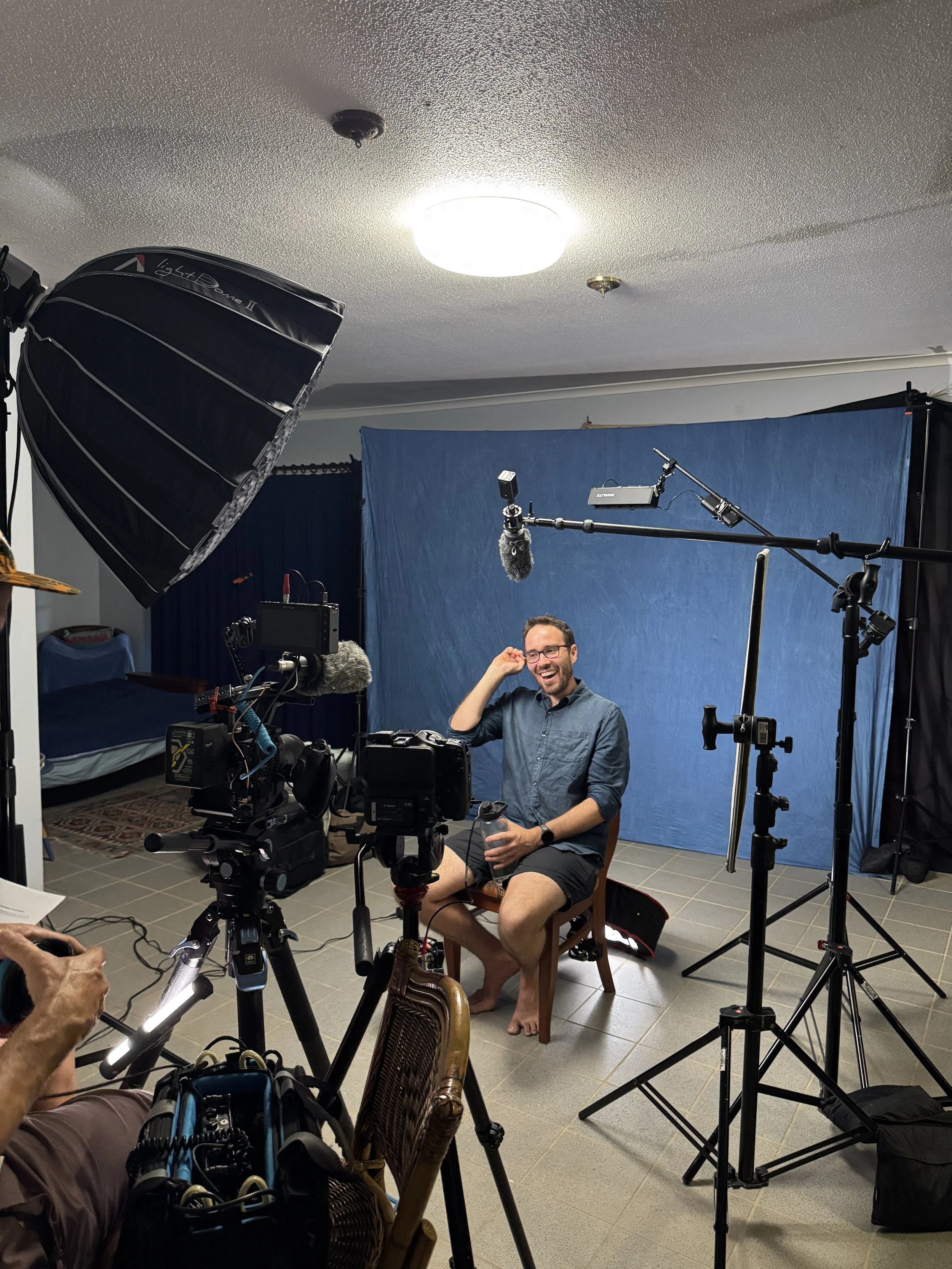
Our first decision on this documentary was where not to film. Boat interviews are a common default for ocean documentaries, but they come with real problems. Boats are loud. The background is constantly changing. In harsh sun, your subject has to sit in shade, which makes exposure a nightmare. And practically, most people don't want to be interviewed on camera straight after a snorkel, they want to feel fresh, not salty and windblown.
There's a quieter issue too: when people know they might be overheard on a moving boat, they don't open up. We were asking people to talk about loss, history and what this reef means to them, that kind of conversation needs privacy and time to breathe.
That difference showed up directly in one interview. One of our contributors became visibly emotional describing how hard it was to campaign for the reef through a mass coral bleaching event — a moment of real vulnerability that almost certainly wouldn't have happened on a boat, in front of a crew, with no privacy and no time to settle into the conversation.
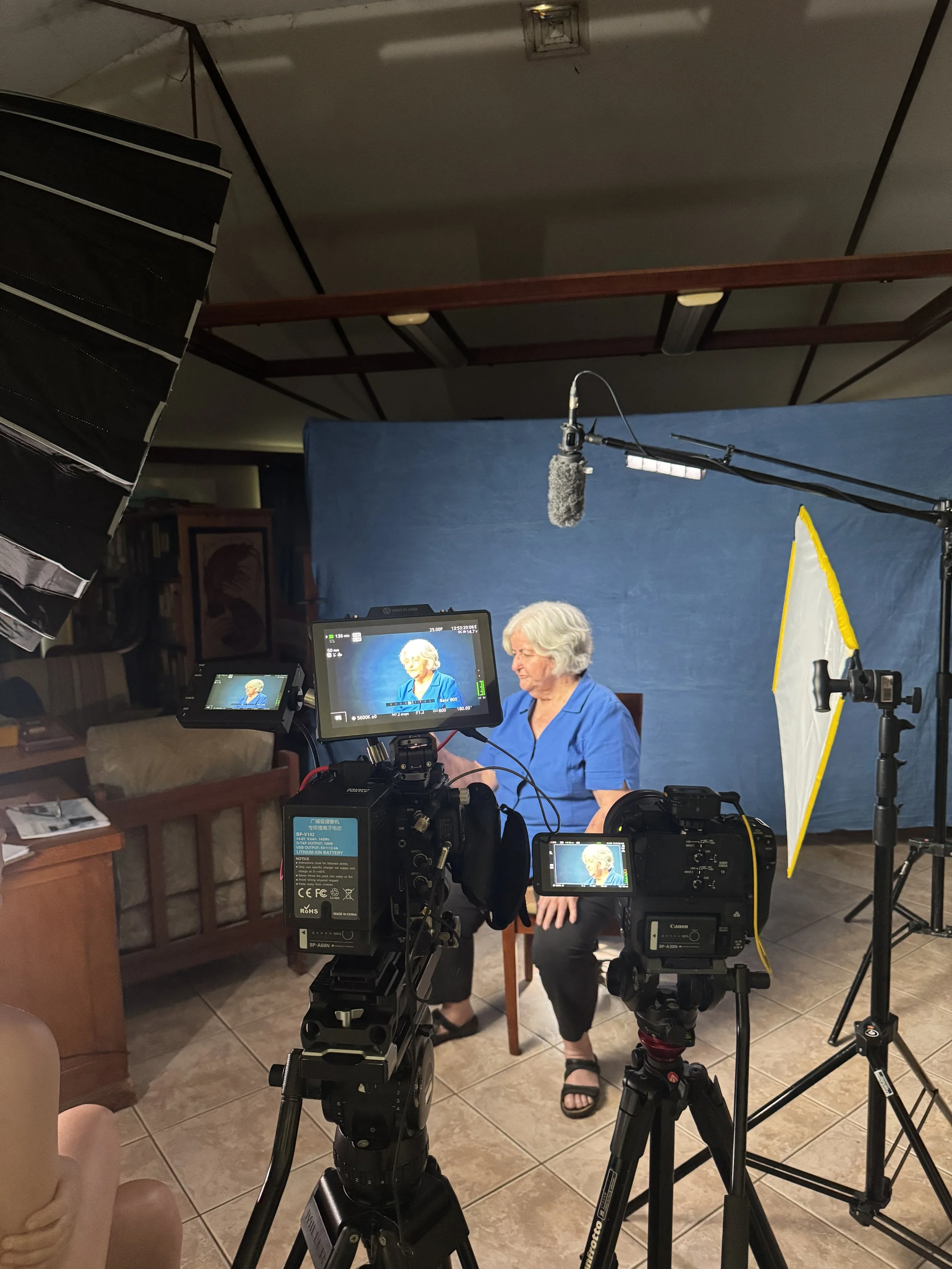
Before we ever picked up a camera, we put together a mood board to pitch this approach to the client — referencing the kind of deep, intimate, character-driven lighting we wanted for the interviews, and contrasting it with the cooler, more atmospheric tone of the underwater footage. Getting that approved upfront meant everyone was aligned on the look before we were on location.
It also solved a practical problem: we were interviewing people in multiple locations across the shoot. A consistent studio setup meant every interview felt like part of the same film, regardless of where in the country it was actually filmed.
So instead of filming on the boat, we built a studio-style interview setup for this underwater documentary — a nicely lit backdrop in an air-conditioned space, with enough time to let the conversation find its own pace. It also meant the interviews weren't tied to a specific boat, day or location — giving AMCS a clean, evergreen backdrop they can reuse across future campaigns, long after this particular shoot wraps.
FILMING WILDLIFE AND B-ROLL ACROSS FOUR REEF LOCATIONS
Underwater, we had a different constraint: four reef sites on the Great Barrier Reef, each visited only once. There were no second chances to come back for a missed shot, so every dive had to capture character B-roll, the environment itself, and any wildlife present, all in a single pass.
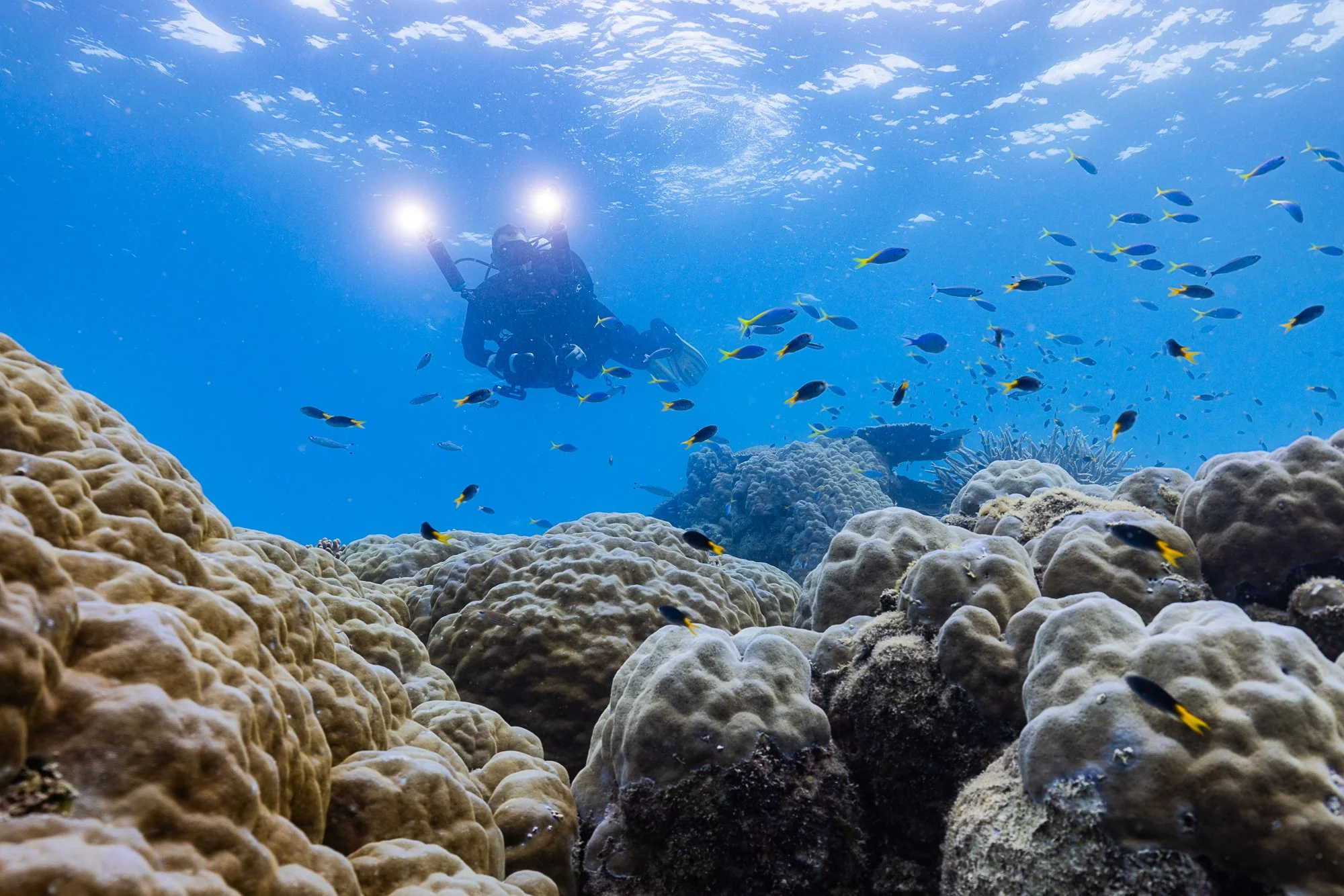
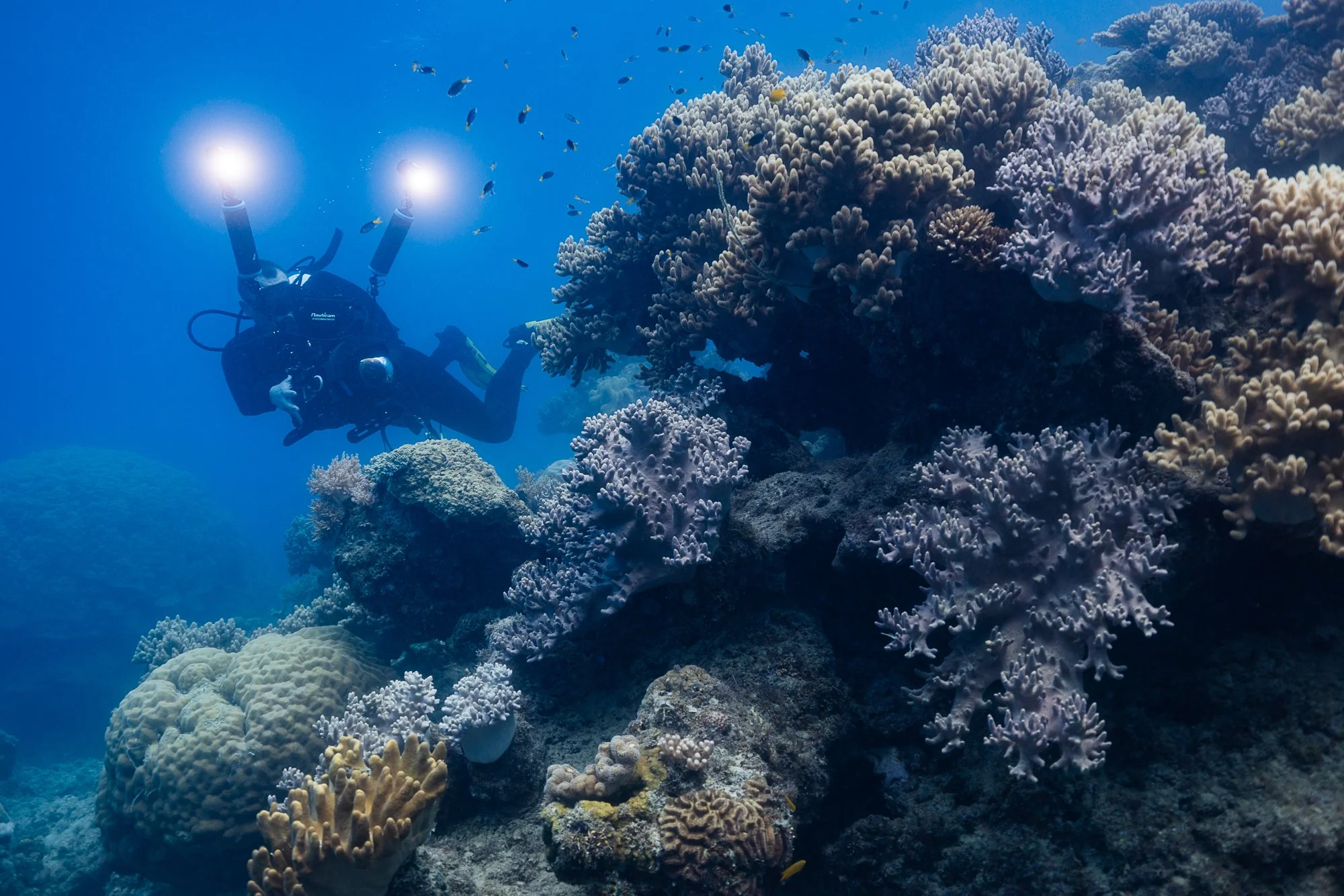
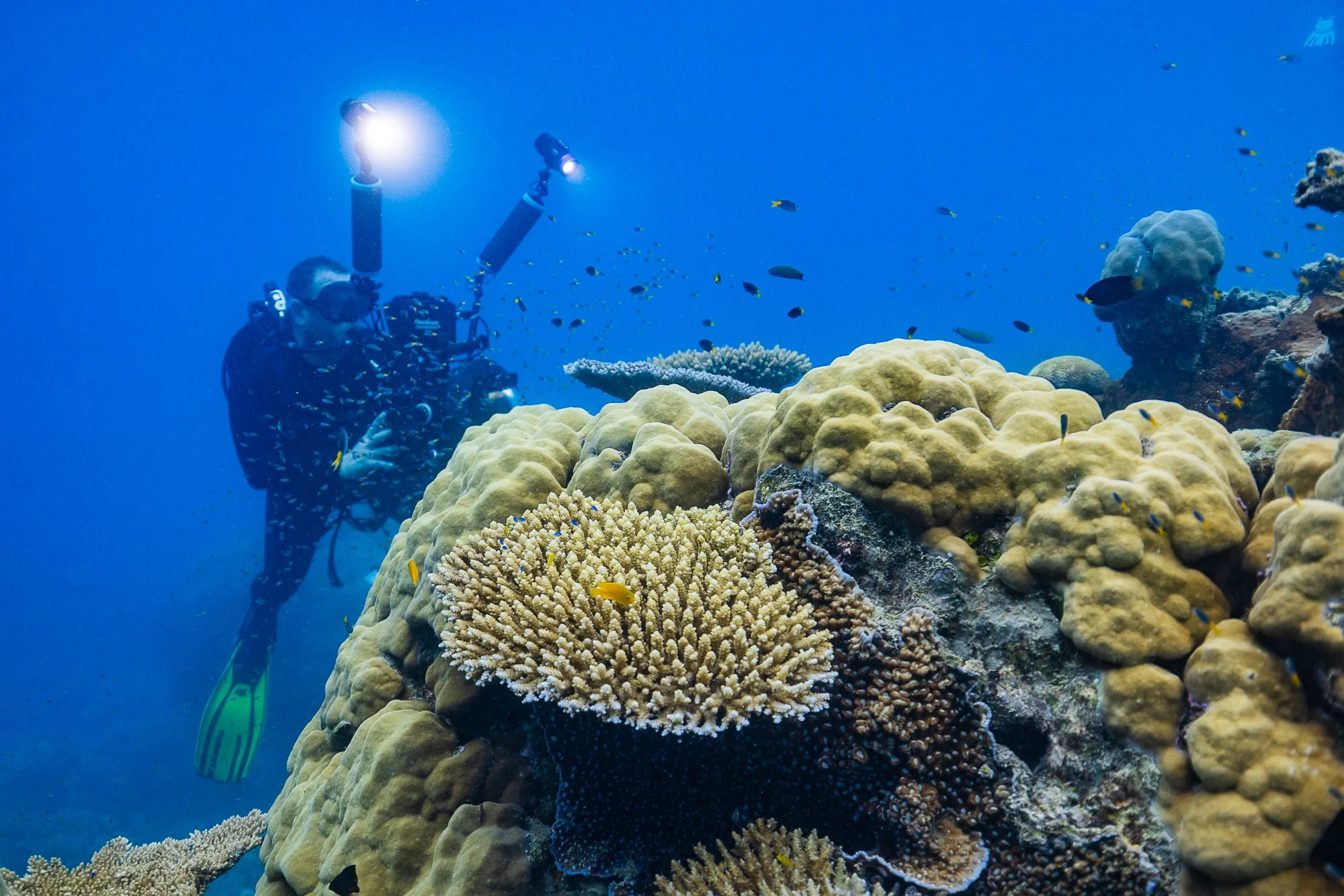
Day one, shooting on the dome with the Tokina 11–20mm, I got every over/under shot I needed and a strong selection of surface-level coverage. But the lens was too wide to get close to animals and coral in a way that felt cinematic — I had the wide shots, but not enough immersive, intimate footage of the reef itself. That's when I switched to the Nauticam WACP and my go-to Canon 28–70 on day two, which let me get in close to wildlife and coral detail without losing image quality.
The other challenge had nothing to do with cameras. With four sites and limited time, everyone on the team explored the reef in their own direction at their own pace — and I needed enough B-roll of every character actually doing citizen science on the reef, not just establishing shots of the environment. It reminded me of years working in tourism, where keeping track of a group spread out in every direction and making sure nobody was missed was half the job.
Watch the full film and learn more about the campaign on the Ellison: The Reef That Saved Them All film page, or see the full underwater camera setup on the equipment page.
EQUIPMENT
Underwater:
RED V-Raptor
230 mm dome port w/ Tokina 11-20mm
Nauticam WACPw/ Canon 28-70mm
Topside:
A - Canon C400 (A-cam)
B - Canon C80 (B-cam) W
